HOW OUR PARENTS MET
Our mother, Ina Hendry, was born in Clydebank, Scotland in 1904, the second youngest of five children. She was the daughter of James and Margaret Hendry (nee Stuart).Her sisters and brothers in order of birth were, Jean, the oldest, who arrived at the very end of the 19th century, then Robert, the second born. He emigrated to the United States as a young man, tried to make a career in show business and then began working in the automotive industry. He settled in Chicago where he married Jeanie. Betty was the third child. She moved to England and married Bert Fay a chef in a London hotel. They adopted Bert’s natural daughter, Cathy. They had no children of their own. The youngest was James. He married Nellie, considered by his family to be socially beneath him. Nellie was a Catholic. They had a large family and lived on a council estate near Loch Lomond. James worked as a master butcher. He died of lung cancer in the late 1950s.
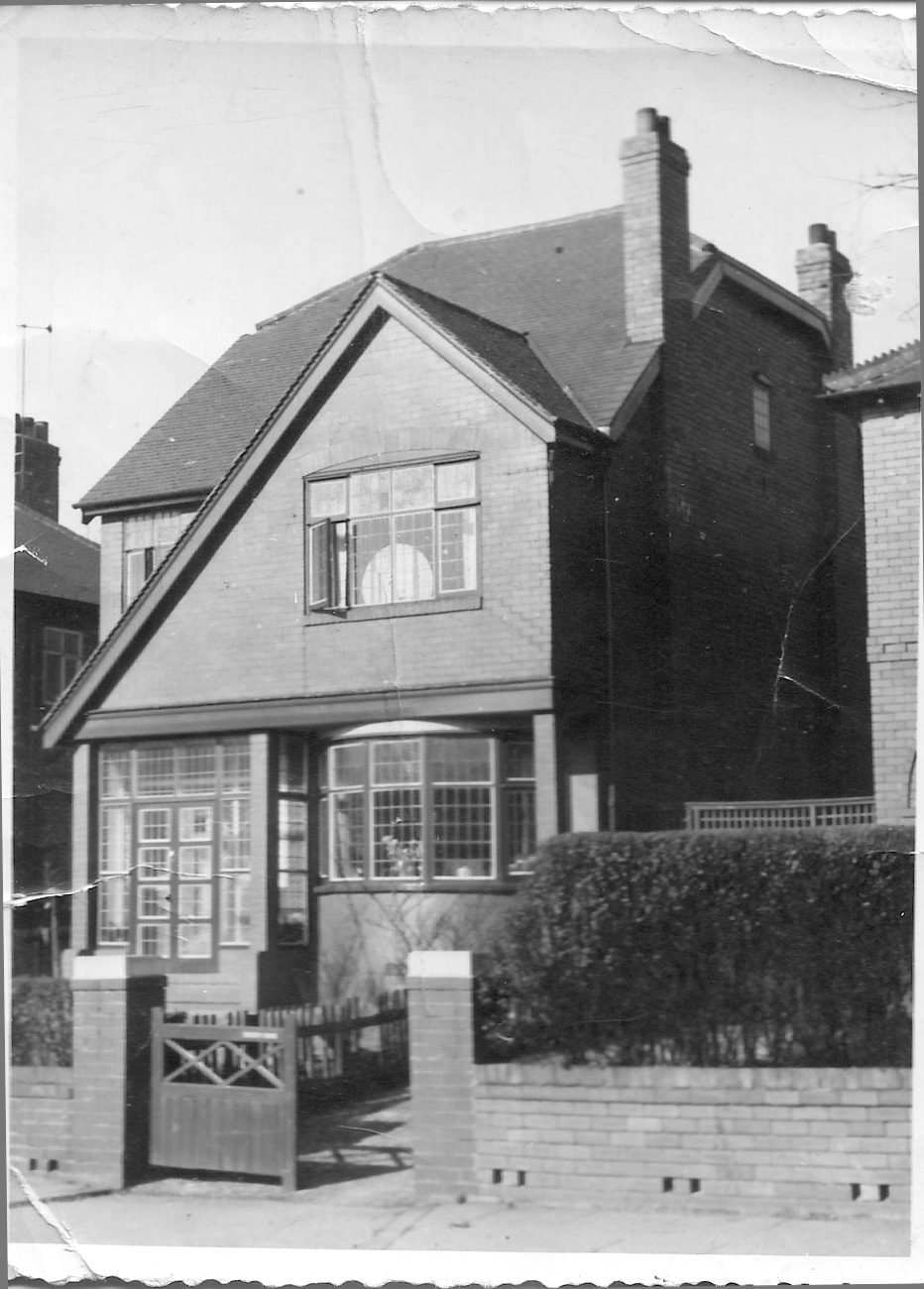
Ina Hendry moved to Manchester when she was nearly 18 and managed a sweet shop. It was here she met our father Joseph Horowitch who fell for her in a big way. He was the second of three surviving children of Meyer and Bella, Jewish Latvian refugees, escaping anti-Semitism and poverty at the turn of the century. They had intended to emigrate to the United States, but somehow, they ended up in Manchester. The family name in Latvia was either Einger or Unger. They acquired the surname Horowitch through a misunderstanding with an immigration officer in Liverpool. (However, on the web we have found a reference to Judel Einger, otherwise known as Joseph Horowitch and our house address in Salford 7 at the time, So, now we know the name was Einger!)).
Myer Horowitch started his own business, buying waste wool, cotton and scrap metal, sorting it and selling it to manufactures, where it was recycled and made into new products. Joseph left school at 14 and went to work for his father. Joseph had contracted Rheumatic fever when a small child. This damaged his heart, which caused his premature death when he was in his fifties.
Ina and Joseph married in 1922. Ina was not welcomed by Joseph’s family. Mixed marriages were considered by both the Jewish and Christian communities as something to be avoided. However, over a period of time, relations improved and Ina converted to orthodox Judaism. She married Joseph in the Synagogue on July 26 1931. She became a Jewish woman, learnt the rituals and festivals. (By the time we were born she had in fact got a Ketubah, a Jewish marriage contract, therefore confirming that we were Jewish).
They wanted children, but it seemed it was not to be. They considered adoption and then after being married for 20 years the miracle happened. Ina was pregnant. Myrna was born in September 1943 and 13 months later a second daughter Sandra was born. Ina named Myrna after Myrna Loy the American film star who was famous for her long beautiful legs.
Ina had become very fat, 16 stone in weight and she didn't even realise that she was pregnant, putting the pains down to heartburn! Maybe Joseph had impotency problems and that is why she never conceived earlier, or maybe he just didn't fancy her as her shape had enlarged considerably over the years.

MYRNA'S MEMORIES
Christmas time ’Mum had Sandra and me peering up the chimney of the coal fire in the breakfast room. Why? We had to ask Father Christmas to get us what we wanted.’
Of course we believed in Father Christmas; leaving a pillowcase out on Christmas Eve for him to fill. Then we discovered the truth. Dad was Father Christmas and not a man with a red hat and coat on with a beard, but Dad, swarthy and handsome even though he was old.
DO YOU REMEMBER?
I can remember when sweets were rationed, rice was only used for making rice pudding, olive oil was bought at Boots the Chemist in little bottles for removing ear wax, spices were limited to cinnamon, nutmeg, pepper and cloves, all vegetables were boiled to death, crisps only came in one flavour, garlic was the work of the devil and everything seemed so bland.
Being brought up in a Jewish household meant that some of the food we ate was more interesting than the usual British diet. Chicken then was a luxury food yet we ate on a regular basis, either made into wonderful chicken soup with mandels or alkies or roasted for Sunday lunch. Mum made the best chopped and fried fish. She always swore that a mix of hake and haddock gave the best and sweetest flavour. This would be chopped with onion, loads of eggs, matzo meal and seasoning then formed into generous patties and fried in oil until deep golden brown. I enjoyed them either hot or cold, served with the beetroot and horseradish relish called chrane. Myrna didn’t like that sauce!
I still hanker after the black bread of my childhood. It doesn’t seem to exist anymore, or at least I can’t find it. This was a crusty sourdough bread made with rye flour and caraway. It was wonderful, as were, and still are, proper Jewish bagels, hard and chewy, nothing like the soft US version sold in most supermarkets today.
We would enjoy salt beef, pickled brisket, worsit and the deep red savaloys served with potato latkes and sweet and sour cucumbers. This was the kosher food of the Ashkenazi Jews of Eastern Europe, hearty, full flavoured and very different from the cuisine of the Sephardi community. We would go to Lapidus's, a local Jewish delicatessen and take away, have a salt beef sandwich at the same time as eyeing up the young men also buying food there.